Features How it works Pricing Compare Blog Download the App

Meal Plans & Student Life

The 7-Day Student Meal Plan

Published September 26, 2026 · By Arthur, Founder of FoodieFlow · ~14 min read

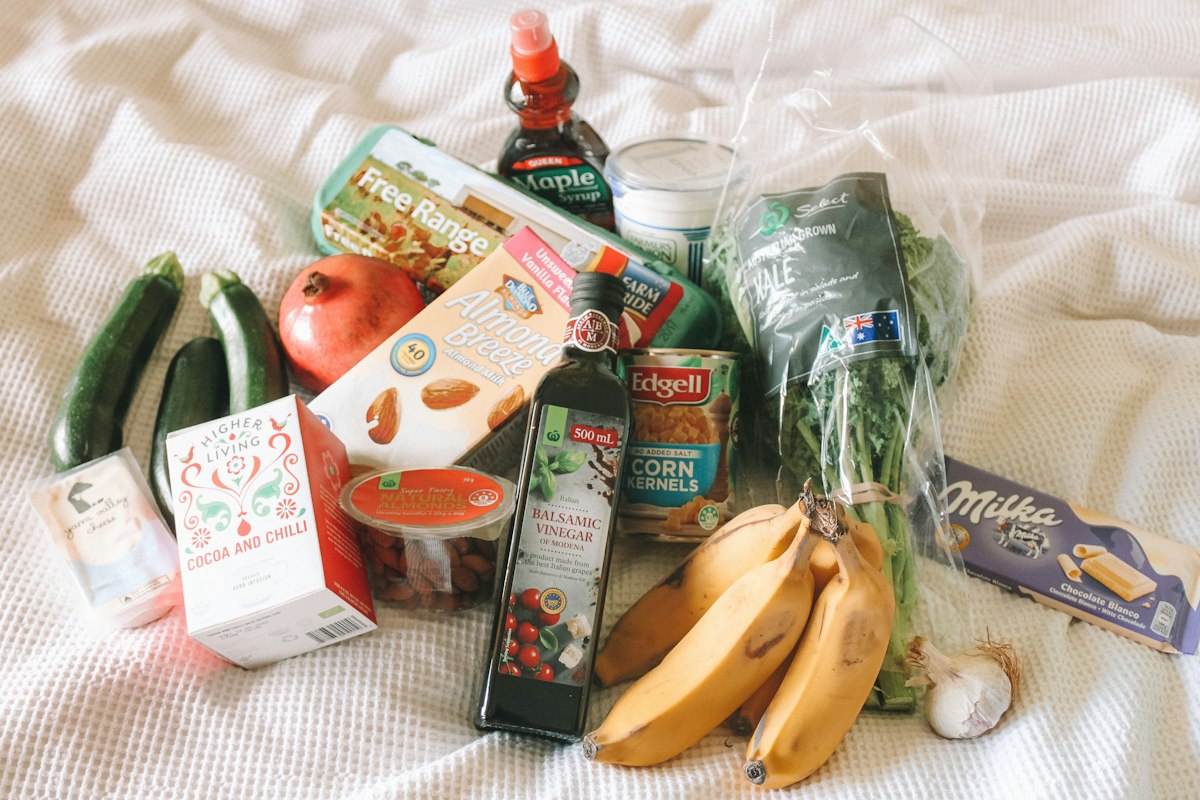
Fresh ingredients for a planned week of meals laid out on a kitchen counter

£20. One week. Zero 6pm arguments about what's for dinner.

Breakfast, lunch and dinner for seven days, built from one shopping list you only have to write once.

Every argument about food in a shared house happens at the same time: around 6pm, when nobody has decided anything and everybody is too hungry to think straight. That's the moment this plan is built to remove. Not because deciding what to eat is hard, but because doing it fresh, every single evening, on top of lectures and everything else, is exhausting in a way that adds up.

I'm a fourth-year engineering student, and I built FoodieFlow because my partner and I kept having exactly that argument. This page is the plan we'd actually hand a friend starting first year: seven days of breakfast, lunch and dinner, one list to shop from, and a backup plan of ten meals that need almost no effort at all for the nights the real plan doesn't happen. If you want the full 25-recipe library this plan draws from, with per-portion costs and macros for every one, that's in our cheap student meals guide; this page is the week put together and the five new dinners that finish it off.

This is more common than anyone admits

A cross-national review of studies found that food insecurity affects a weighted mean of 44% of higher education students worldwide, and separate UK research links it directly to reliance on student loans and the cost of rent and bills. A plan that removes the daily decision, and a shopping list that stops you overbuying, is a genuinely useful lever against that, not just a nice-to-have.

Sources: systematic review, PubMed; UK student food insecurity study.

Own-label throughout, at Aldi or Lidl prices at the time of writing, the whole week comes to roughly £19 to £22. That's breakfast, lunch and dinner, seven days, for under £3 a day.

Your week, planned

Everything below links straight to the recipe. Most of the breakfasts and lunches are from the 25-recipe library; the five new dinners are further down this page, written specifically to finish this particular week's shopping list without waste.

Two of the batch dinners, the ragu and the dhal, are deliberately doubled up across two nights each. That's not filler: cooking once and eating twice is the single biggest lever on this whole page, because the second night costs you nothing but a microwave.

One shopping list for the whole week

Own brand throughout. Take this list into Aldi or Lidl and you will not need to go back mid-week for anything on the plan above.

AisleItems
Tins & jarsChopped tomatoes ×3, chickpeas ×2, tuna ×2, coconut milk, cannellini or kidney beans, baked beans, black beans
Dried goodsRed lentils (500g), rice, wholewheat pasta, oats, couscous
Fresh produceOnions ×3, carrots ×2, garlic, kale, red pepper, sweetcorn, lemon, apple ×2, banana, baking potato, spinach
Meat & alternativesBeef mince 500g, sausages ×6, chicken thighs ×4, leftover or rotisserie chicken
Dairy & eggsEggs ×6, milk, cheddar block, butter
FrozenMixed berries, mixed veg, peas
StorecupboardSoy sauce, honey, curry powder, chilli flakes, cumin, cinnamon, stock cubes, peanut butter, chia seeds
Bread & wrapsWholemeal bread, tortilla wraps ×2, crusty or garlic bread

Stop retyping this list every week

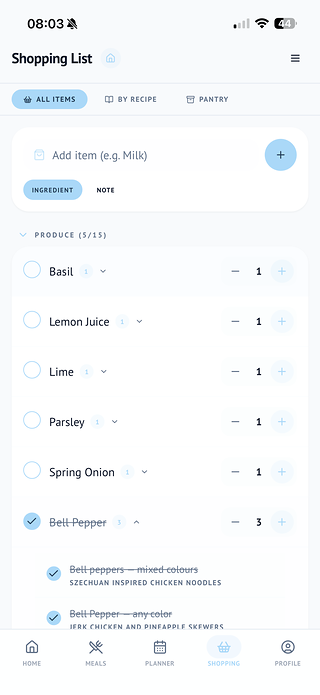
Save these recipes in FoodieFlow once, and it builds this exact aisle-sorted shopping list for you automatically, crossing off anything already in your pantry. Swap a meal on a day you fancy something else and the list updates itself in the background, no retyping required.

How to read the cards below

Every recipe below has the same card: time, servings, rough cost per portion, and the macros. Cost is per portion at own-label Aldi and Lidl prices at the time of writing: Ultra-low is under 50p, Low is 50p to £1.25, Moderate is £1.25 to £2.50. Macros are estimates, not gospel, use them as a guide to whether a meal is protein-heavy or carb-heavy rather than a precise count.

Use the finder to jump straight to the five new batch dinners or the ten zero-effort meals, search by ingredient, or filter by time and cost.

New for this plan · Batch dinners

The 5 new dinners that finish this week off

These five are written specifically to use up what the rest of the week's shopping list leaves behind, so nothing in the fridge goes to waste by Sunday. Three of them make four portions, so cooking once genuinely does cover two nights.

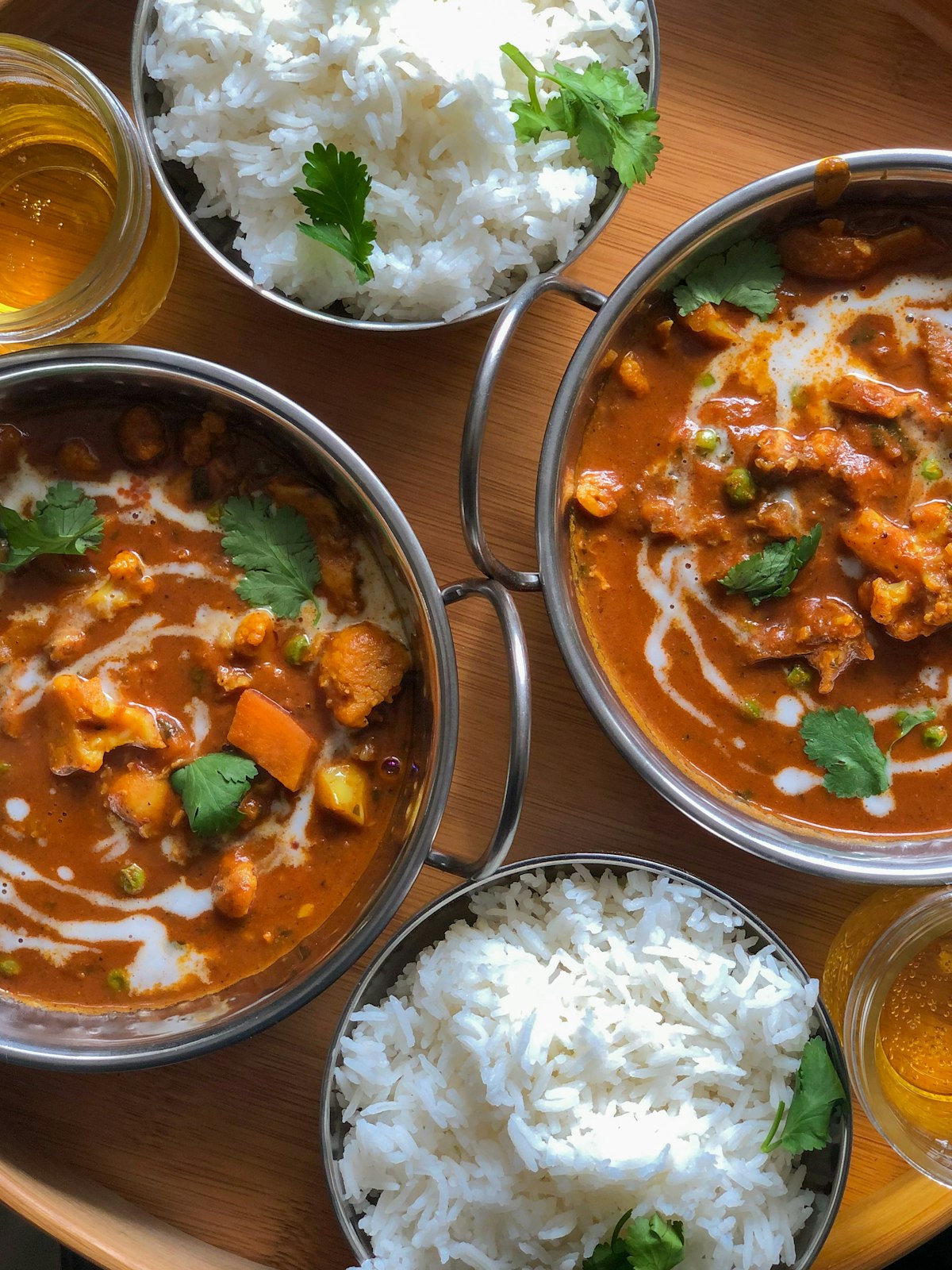
Two bowls of chicken curry served with rice and coriander

New Dinner 1 · BATCH DINNER

Garlic Butter Chickpea & Kale Traybake

Dry-roasted chickpeas finished in garlic butter with crisp-edged kale. One tray, about 62p a portion, makes four.

  • Time30 min
  • Serves4
  • CostLow
  • Equipment1 tray
  • Calories340
  • Protein14g
  • Carbs38g
  • Fat15g

Ingredients

Tinned chickpeas, drained
2 × 400g tins
Curly kale, tough stalks removed, torn
150g
Garlic, thinly sliced
4 cloves
Butter
50g
Olive oil
1 tbsp
Chilli flakes
1/2 tsp
Lemon
1/2

Method

  1. Oven to 200C (180C fan). Tip the drained chickpeas onto a large baking tray, drizzle with the oil, season, and roast for 15 minutes until they dry out and start to crisp at the edges.
  2. Melt the butter in a small pan with the garlic and chilli flakes over a low heat for 2 minutes, until fragrant. Don't let the garlic brown or it turns bitter.
  3. Tip the kale onto the tray with the chickpeas, pour the garlic butter over, and toss until everything is coated.
  4. Back in the oven for 8 to 10 minutes, until the kale is crisp at the edges and the chickpeas are properly golden.
  5. Squeeze the lemon over and serve with crusty bread for mopping up the buttery juices.

Why it works. Roasting the chickpeas dry before the butter goes anywhere near them is what gets them crisp rather than soggy. Kale holds its structure in a hot oven in a way spinach never does, so it doesn't collapse into a wet mat.

New Dinner 2 · BATCH DINNER

One-Pot Sausage & Lentil Ragu

Red lentils simmered in the fat browned sausages leave behind. One pot, four portions, the depth of a slow-cooked ragu in well under an hour.

  • Time35 min
  • Serves4
  • CostLow
  • Equipment1 pot
  • Calories430
  • Protein26g
  • Carbs42g
  • Fat16g

Ingredients

Sausages (pork or plant-based)
6
Dried red lentils
150g
Chopped tomatoes
400g tin
Onion, diced
1
Carrot, diced
1
Garlic, crushed
2 cloves
Vegetable or chicken stock
600ml

Method

  1. Brown the sausages whole in a big pot over a medium-high heat, then lift them out and slice into thick chunks.
  2. Soften the onion and carrot in the same pot, in the fat the sausages left behind, for about 5 minutes.
  3. Add the garlic and cook for a minute, then tip in the lentils, the tomatoes, the stock and the sliced sausages.
  4. Bring it to a boil, then drop it to a simmer, uncovered, for 20 to 25 minutes, stirring now and then, until the lentils have collapsed and the sauce has thickened around everything.
  5. Season and portion into four containers. It thickens further in the fridge, so loosen leftovers with a splash of water when you reheat.

Why it works. The lentils cook directly in the fat the sausages release, so they pick up a meaty depth a plain lentil dhal never gets. You get the body of a slow-cooked ragu in well under an hour.

New Dinner 3 · BATCH DINNER

Loaded Jacket Potato with Tuna Mayo

A jacket potato that costs almost nothing and needs almost no attention while it bakes, topped with a proper hit of protein.

  • Time10 min active, 50 min in the oven
  • Serves1
  • CostLow
  • EquipmentOven
  • Calories480
  • Protein32g
  • Carbs55g
  • Fat14g

Ingredients

Baking potato, large
1
Tinned tuna, drained
145g
Mayonnaise
2 tbsp
Sweetcorn, drained
3 tbsp
Spring onion, sliced (optional)
1
Cheddar, grated
30g

Method

  1. Heat the oven to 200C. Prick the potato all over with a fork and bake for 50 to 60 minutes, until the skin is crisp and a knife goes in with no resistance. In a hurry, microwave it on high for 8 minutes instead, per the Microwave Baked Potato method further down this page.
  2. While it bakes, mix the tuna, mayonnaise, sweetcorn and spring onion in a bowl.
  3. Cut the potato open lengthways and fluff the inside with a fork.
  4. Pile the tuna mayo on top and finish with the cheddar. It melts from the heat of the potato.

Why it works. A jacket potato costs almost nothing and needs almost no attention while it cooks. The tuna mayo turns it from a side dish into a full meal with a real hit of protein.

New Dinner 4 · BATCH DINNER

Honey Soy Glazed Chicken Thighs & Rice

A four-ingredient glaze that reduces to sticky in under three minutes, over seared chicken thighs and rice.

  • Time25 min
  • Serves4
  • CostModerate
  • Equipment1 pan
  • Calories490
  • Protein34g
  • Carbs52g
  • Fat16g

Ingredients

Chicken thighs, boneless
4
Soy sauce
3 tbsp
Honey
2 tbsp
Garlic, crushed
2 cloves
Dry rice
300g
Spring onions or sesame seeds, to serve
Optional

Method

  1. Whisk the soy sauce, honey and garlic together in a bowl. Drop the chicken in and turn it to coat, 10 minutes if you have time, straight into the pan if you don't.
  2. Get a frying pan properly hot and sear the chicken for 5 to 6 minutes on the first side until deep golden, then flip and cook for another 4 minutes.
  3. Pour any leftover marinade into the pan and let it bubble hard for 2 to 3 minutes until it reduces to a sticky glaze, spooning it over the chicken as it goes.
  4. Cook the rice per the packet alongside. Slice the chicken, serve over the rice, and pour the glaze from the pan over the top.

Why it works. Honey caramelises fast, so the glaze needs almost no reduction time. Searing the chicken first gives the sugars something to cling to instead of just sliding around the pan.

Cooked rice, one rule: cool leftover rice within an hour, fridge it, eat within 24 hours, and reheat once until steaming hot. Uncooked rice carries spores that survive boiling, so how it's cooled matters more than how it's reheated — the full explanation is in our leftovers guide.

New Dinner 5 · BATCH DINNER

Storecupboard Coconut Dhal

Red lentils, a tin of coconut milk and a tin of tomatoes, simmered into a proper dhal for about 48p a portion.

  • Time30 min
  • Serves4
  • CostUltra-low
  • Equipment1 pan
  • Calories320
  • Protein14g
  • Carbs38g
  • Fat13g

Ingredients

Dried red lentils
200g
Coconut milk
400ml tin
Chopped tomatoes
400g tin
Onion, diced
1
Garlic, crushed
2 cloves
Curry powder
1 tbsp
Vegetable stock
400ml

Method

  1. Soften the onion in a splash of oil in a big pan for 5 minutes.
  2. Add the garlic and curry powder and stir them through the oil for a minute, until fragrant.
  3. Tip in the lentils, the tomatoes, the coconut milk and the stock. Bring it to a boil, then drop it to a simmer.
  4. Twenty minutes, stirring now and then, until the lentils have broken down completely and the dhal has thickened to a proper coating consistency.
  5. Season and serve, with rice or naan if you have either lying around.

Why it works. Dried red lentils are the best value protein in the entire shop, and coconut milk carries the curry powder's flavour further than water or stock alone would.

Decision fatigue is real. Let the app decide.

If looking at a half-empty fridge makes you want to cry, FoodieFlow's Pantry Tracker will tell you what you can make with what you already own. No math, no thinking, no more staring at the shelf at 6pm.

Backup plan · For the nights the plan falls apart

10 zero-effort meals for when you have nothing left

There is a specific point in the semester, usually around week six, where the idea of chopping an onion feels like climbing a mountain. You've been in lectures all day, the sink is full of someone else's plates, and the temptation to drop £15 on a takeaway is overwhelming. These ten are the answer to that exact moment: under ten minutes, one pan at most, and genuinely satisfying rather than just filling.

Organised pantry shelves stocked with staple ingredients, ready for a quick zero-effort meal

Zero-Effort 1

The Microwave Baked Potato 2.0

Pure, unadulterated comfort. One potato, one microwave, beans and cheese.

  • Time8 min
  • Serves1
  • CostUltra-low
  • EquipmentMicrowave
  • Calories420
  • Protein18g
  • Carbs62g
  • Fat11g

Ingredients

Large baking potato
1
Baked beans (half a tin)
200g
Cheddar, grated
40g
Butter
Small knob

Method

  1. Prick the potato all over with a fork. This stops it exploding, which is exactly as unpleasant to clean up as it sounds.
  2. Microwave on high for 7 to 8 minutes, turning it over halfway, until it's soft the whole way through when you squeeze it.
  3. Tip the beans into a small bowl and microwave for 60 seconds until hot.
  4. Cut the potato open, mash the inside roughly with a fork right in the skin, and pour the hot beans over.
  5. Bury it in the grated cheddar. The heat of the potato and the beans melts it for you.

Why it works. One dish, one bit of equipment, and it leans on the two cheapest proteins in the shop, beans and cheese, to turn a single potato into an actual dinner.

Zero-Effort 2

Pesto & Pea Tortellini

Zero chopping, one pan to wash, eaten straight out of it.

  • Time4 min
  • Serves1
  • CostLow
  • Equipment1 pan
  • Calories520
  • Protein19g
  • Carbs58g
  • Fat22g

Ingredients

Fresh tortellini (fridge aisle)
250g
Frozen peas
75g
Green pesto (jarred)
2 tbsp

Method

  1. Boil the tortellini in well salted water for the time on the pack, usually about 3 minutes; they float when close to done.
  2. Throw the frozen peas into the same water for the last minute.
  3. Drain, keeping a splash of the cooking water back.
  4. Off the heat, stir the pesto through, loosening it with the reserved water if it's sitting too thick, and eat straight from the pan.

Why it works. Fresh tortellini cooks in the time it takes to boil a kettle, so this is genuinely faster than most takeaway delivery estimates.

Zero-Effort 3

The 3-Minute Any-Dip Quesadilla

Whatever dip is open in the fridge, folded into a tortilla with beans and cheese.

  • Time3 min
  • Serves1
  • CostUltra-low
  • EquipmentFrying pan
  • Calories410
  • Protein16g
  • Carbs38g
  • Fat20g

Ingredients

Large tortilla wrap
1
Hummus or tomato purée
2 tbsp
Tinned black beans, drained
100g
Cheddar, grated
40g

Method

  1. Lay the tortilla flat in a dry frying pan, off the heat.
  2. Smear one half with whatever dip you've got, hummus or tomato purée both work, then scatter the beans and cheese over the same half.
  3. Fold the empty half over.
  4. Put the pan on a medium heat and cook for 2 to 3 minutes a side, until the cheese has melted and the outside is properly crisp. Cut into wedges.

Why it works. This is the version for a fridge with nothing but half a jar of something in it. Any soft dip holds the filling together as well as mashed beans do.

Zero-Effort 4

The Upgraded Instant Ramen

Cheap packet noodles with a poached egg and frozen spinach stirred through. Suddenly it's an actual meal.

  • Time5 min
  • Serves1
  • CostUltra-low
  • Equipment1 pan
  • Calories390
  • Protein17g
  • Carbs48g
  • Fat14g

Ingredients

Instant noodles, dried block with seasoning
1 pack
Egg
1
Frozen spinach
40g
Soy sauce
1 tsp
Sesame oil
A few drops

Method

  1. Boil the noodles in a little less water than the pack says, so the broth ends up thicker rather than thin.
  2. Once it's bubbling, crack the egg straight into the broth and don't touch it for 2 minutes, so it poaches rather than scrambles.
  3. Stir in the frozen spinach for the last minute, just until it wilts.
  4. Finish with the soy sauce and a few drops of sesame oil.

Why it works. The egg poaches directly in the seasoned broth instead of a separate pan, so this is one pan, five minutes, and a genuine protein hit on top of an instant noodle base.

Zero-Effort 5

Boiling Water Couscous Bowl

No hob, no pan. A kettle, a bowl and five minutes for a proper lunch.

  • Time5 min
  • Serves1
  • CostLow
  • EquipmentKettle & bowl
  • Calories380
  • Protein16g
  • Carbs62g
  • Fat6g

Ingredients

Dried couscous
60g
Vegetable stock cube
1/2
Tinned chickpeas, drained
200g
Lemon juice
A squeeze
Leftover roasted veg or fresh tomatoes
A handful

Method

  1. Tip the couscous into a bowl and crumble the stock cube over it.
  2. Pour boiling water over until it's just covered, about a centimetre above the grains.
  3. Put a plate on top immediately and leave it for 5 minutes; the trapped steam does the cooking.
  4. Fluff it through with a fork, then stir in the chickpeas, a squeeze of lemon, and whatever leftover veg or tomatoes you've got.

Why it works. No cooking, no hob, no queue for a burner in a shared kitchen. This is the one for the smallest, most contested kitchen there is.

Zero-Effort 6

Sriracha Scrambled Eggs on Toast

Slow, low-heat scrambled eggs with a heavy drizzle of sriracha. The cheapest complete protein on campus.

  • Time4 min
  • Serves1
  • CostUltra-low
  • Equipment1 pan
  • Calories380
  • Protein20g
  • Carbs30g
  • Fat18g

Ingredients

Large eggs
2
Milk
A splash
Butter
10g
Wholemeal toast
2 slices
Sriracha
A drizzle

Method

  1. Crack the eggs into a bowl with a splash of milk and beat with a fork.
  2. Melt the butter in a pan over a low heat, pour the eggs in, and push them gently around the pan rather than stirring constantly.
  3. Pull them off the heat while still slightly underdone; they keep cooking in the pan.
  4. Pile onto the toast and drizzle heavily with sriracha.

Why it works. Low heat is the entire technique. Rushed scrambled eggs go rubbery; slow ones stay soft, and the sriracha does the rest of the work.

Zero-Effort 7

Gnocchi in Tomato Mascarpone

Gnocchi floats when it's done. Drain it, stir through a store-bought sauce and spinach, and it tastes far richer than four minutes deserves.

  • Time4 min
  • Serves1
  • CostModerate
  • Equipment1 pan
  • Calories560
  • Protein15g
  • Carbs68g
  • Fat24g

Ingredients

Fresh gnocchi (half a 500g pack)
250g
Tomato and mascarpone pasta sauce (half a tub)
150g
Fresh spinach
A handful

Method

  1. Cook the gnocchi in boiling water; it's done the moment it floats to the top, usually about 2 minutes.
  2. Drain it and tip it straight back into the hot pan.
  3. Stir in the sauce and the spinach, off the heat. The residual heat wilts the spinach for you.

Why it works. Gnocchi is nearly instant to cook and holds a rich, ready-made sauce far better than plain pasta, so it reads as a proper dinner rather than a shortcut.

Zero-Effort 8

The “No-Cook” Tuna Mayo Rice

Microwave rice, tinned tuna, mayonnaise. Fast, filling, and high in protein.

  • Time2 min
  • Serves1
  • CostLow
  • EquipmentMicrowave
  • Calories460
  • Protein28g
  • Carbs52g
  • Fat16g

Ingredients

Microwave rice pouch (jasmine or basmati)
250g
Tinned tuna, drained
145g
Mayonnaise
2 tbsp
Soy sauce
1 tsp
Cucumber, sliced, to serve
Optional

Method

  1. Microwave the rice pouch on high for 2 minutes, per the pack.
  2. Tip it into a bowl and add the tuna, mayonnaise and soy sauce.
  3. Mix it all together. Slice cucumber on the side if you have one.

Why it works. Nothing here needs a hob. If you own a microwave and a tin opener, this is a two-minute meal with a genuine 28g of protein in it.

Zero-Effort 9

Bagel Pizzas

A toasted bagel, tomato purée and heavily grated cheese, under the grill until bubbling and golden.

  • Time8 min
  • Serves1
  • CostLow
  • EquipmentGrill / oven
  • Calories430
  • Protein20g
  • Carbs45g
  • Fat18g

Ingredients

Bagel
1
Tomato purée or leftover pasta sauce
2 tbsp
Mozzarella or cheddar, grated
50g
Mixed dried herbs
A pinch

Method

  1. Slice the bagel in half and toast it lightly, just enough to firm up the cut side.
  2. Spread the tomato purée or leftover sauce over each half.
  3. Cover heavily with the grated cheese and scatter the dried herbs over.
  4. Grill until the cheese is bubbling and starting to catch at the edges, about 3 to 4 minutes.

Why it works. A bagel's density holds up under the grill far better than sliced bread, so the base stays firm instead of going soggy under the sauce.

Zero-Effort 10

The Peanut Butter & Banana Wrap

No hob, no pan, no equipment at all. It sounds like a snack; the fat and fibre keep you full through a 9am lecture.

  • Time1 min
  • Serves1
  • CostUltra-low
  • EquipmentNone
  • Calories420
  • Protein12g
  • Carbs48g
  • Fat20g

Ingredients

Large flour tortilla
1
Smooth peanut butter
2 tbsp
Banana, whole, peeled
1

Method

  1. Lay the tortilla flat and spread the peanut butter thickly across the middle.
  2. Put the whole peeled banana in the centre.
  3. Roll it up like a burrito, tucking the ends in first.

Why it works. When you cannot bring yourself to turn on a hob, this is the floor: one minute, no cooking, and the fat and fibre still hold you until lunch.
Two things that pair with this plan: our 25-recipe cheap student meals library is where every breakfast and lunch above lives in full, with its own portion scaler and cost breakdown, and the student food budget guide covers which supermarket is genuinely cheapest in 2026 if you want to push this week's £20 even lower.

How FoodieFlow Helps

This plan, but it builds itself next week too

Printing this page and sticking it on the fridge gets you through one week. FoodieFlow is built for every week after that, so the planning happens once and the app just keeps adapting it.

  • Repeat last week, in one tap. Brings last week's plan forward onto the days you haven't filled in yet, lined up so Tuesday repeats Tuesday, without overwriting anything you've already placed.
  • Fill my week automatically. One tap fills your empty days, learning which nights you want something quick, how often you're happy to repeat a favourite, and what you keep skipping.
  • Save this plan as a template. Build a week once, name it, and drop it onto any week going forward rather than starting from scratch every time.
  • Pantry-aware suggestions. Switch on "use up what's going off" when you ask for an idea, and the Foodie Assistant builds a meal around whatever in your kitchen is closest to its use-by date.
  • Aisle-sorted shopping list, automatically. Every ingredient across the week, grouped the way the supermarket is laid out, with anything already in your pantry left off.
  • Share the whole plan with your flat. Household mode syncs one plan, one pantry and one list across everyone's phones, for free once one person has Pro.
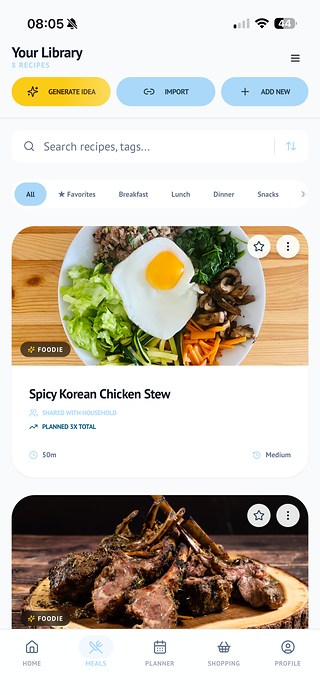
FoodieFlow's meal library showing saved recipes ready to drop into a weekly plan
FoodieFlow's aisle-sorted shopping list with pantry items excluded automatically

Free to start, with a weekly cap on assistant-generated plans. No card needed.

Frequently asked questions

How much does this 7-day student meal plan cost?

The whole week, breakfast, lunch and dinner for seven days, comes to roughly £19 to £22 at Aldi or Lidl using own-label ingredients throughout. That works out at under £3 a day covering three meals, and the shopping list above is the exact one list that covers it.

What if I don't like one of the meals in the plan?

Swap it. The plan is built from recipes that share a small pool of staples, so most swaps only change one or two items on the shopping list rather than the whole shop. If you save the plan in FoodieFlow, swapping a meal updates the shopping list automatically rather than leaving you to work out what changed.

Can I follow this meal plan if I'm vegetarian or on a budget that's even tighter than £20?

Swap the meat for its tinned or dried equivalent: the sausages in the ragu become a second tin of lentils or chickpeas, the chicken thighs become extra chickpeas or paneer, and the tuna in the jacket potato becomes extra sweetcorn and cheese. Lentils, chickpeas and beans are consistently the cheapest protein in a UK supermarket, so the plan gets cheaper, not harder, without meat.

What do I cook when I'm too exhausted to follow any plan at all?

That's exactly what the 10 zero-effort meals above are for: the microwave jacket potato, the upgraded instant ramen with a poached egg, or the peanut butter and banana wrap that needs no cooking at all. All ten take five minutes or less and use one pan at most, so they work as a backup plan for any night the real plan falls apart.

Is it actually cheaper to follow a meal plan than to decide what to cook each day?

Yes, for two reasons. Buying to a list means you buy exactly what a week of meals needs rather than guessing, which cuts down on food that goes off unused. And having a plan removes the moment of decision fatigue at 6pm that is most people's actual trigger for ordering a takeaway, which is where the real money leaks.

Can I share this meal plan and shopping list with my flatmates?

Yes, either as a printed page on the fridge, or through FoodieFlow's household mode, which syncs one meal plan, one digital pantry and one shopping list across everyone's phones for free once one person has a subscription. Ticking an item off in the aisle removes it from everyone else's list in real time.

Costs and macros on this page are estimates based on own-label supermarket prices at the time of writing and will vary by brand, retailer and portion size. Nutrition information is general guidance, not personalised dietary advice. If you have a medical condition, an allergy or specific dietary needs, speak to a GP or a registered dietitian.

Stop deciding what's for dinner every night

Save this week's recipes, let FoodieFlow build next week's shopping list automatically, and share the whole plan with your flat for free. Free to start.

Free to download. No card required.

A

Arthur

Founder, FoodieFlow

Arthur is a 4th-year Mechanical Engineering student who works in the field alongside his degree. He built FoodieFlow with his partner in mind, to solve their household's biggest recurring argument: what's actually for dinner.